
What Is the 2026 Best Solar Independent Power Wall?
The 2026 search for the best Solar Independent Power Wall begins with a difficult truth: no single battery fits every home. A coastal apartment, a rural cabin, and a blackout-prone family house need different designs. Capacity matters, but usable capacity matters more. A 15 kWh battery may deliver less after reserve settings, temperature limits, and conversion losses. Small details become visible at night.
The International Energy Agency’s Batteries and Secure Energy Transitions report states that global energy storage capacity must increase sixfold by 2030. That projection gives residential batteries a larger role in flexible, distributed power systems. The IEA’s Renewables 2024 report also expects renewables to approach 35% of global electricity generation by 2025. More solar generation creates more value for storage, especially when panels produce power at midday and homes need it after sunset. However, growth does not guarantee quality.
This guide evaluates the 2026 Solar Independent Power Wall through measurable criteria. These include round-trip efficiency, continuous output, backup switching time, battery chemistry, thermal protection, warranty terms, and software reliability. The U.S. National Renewable Energy Laboratory emphasizes that real system performance depends on climate, installation, shading, and household demand. That warning deserves attention. Laboratory numbers can look impressive beside a garage, yet perform differently during a winter outage.
Safety comes first. Independent certifications, verified degradation data, and qualified installation should outweigh polished advertising. A lower purchase price may also create higher lifetime costs. That part is easy to underestimate. Using manufacturer documents, industry reports, and practical operating conditions, this comparison asks a more useful question: which power wall delivers dependable energy, not merely the largest headline capacity?
Definition and Role of a Solar Independent Power Wall
What Is the 2026 Best Solar Independent Power Wall?
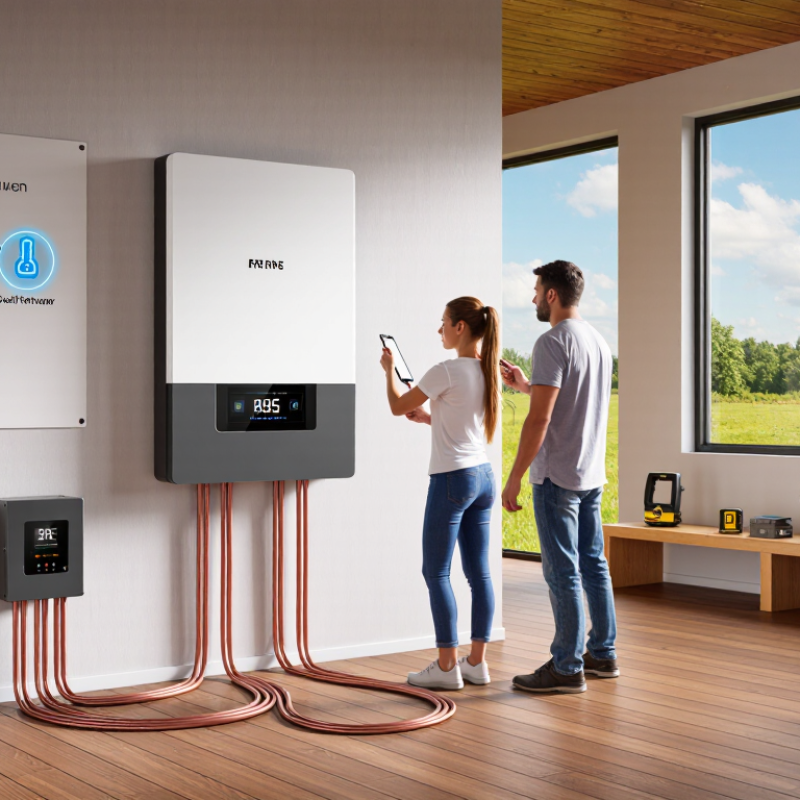
A solar independent power wall is a battery energy storage system connected to solar panels, an inverter, and household circuits. It stores daytime electricity for evening use or grid interruptions. Unlike a basic backup battery, it can coordinate solar generation, charging, and essential loads through an energy management system. Its role is practical: reduce grid dependence, protect refrigeration and communication equipment, and improve the use of self-generated power.
The “best” system in 2026 will depend on site conditions, not advertising claims. A careful assessment should include usable capacity, continuous output, round-trip efficiency, cycle life, thermal control, and weather protection. I would also check whether the inverter supports islanded operation and whether installation follows local electrical requirements. A larger battery is not always better. Oversizing can increase cost while leaving capacity unused. That judgment is easy to miss.
Tips: List essential appliances first. Measure their wattage. Check starting surges from pumps or motors. Keep the battery in a dry, ventilated location. Ask a qualified installer for load calculations, maintenance procedures, emergency isolation, and documented warranty terms. Independent testing reports are useful, but real household usage remains the strongest reference. A system may perform well in a mild climate yet struggle during repeated heatwaves or cold nights. Performance data should be read with those conditions in mind.
What Is the 2026 Best Solar Independent Power Wall? - Definition and Role of a Solar Independent Power Wall
A solar independent power wall is an integrated solar-plus-storage system that stores electricity from photovoltaic panels and supplies power to household or small commercial loads independently of the utility grid. The best solution is determined by the application, safety requirements, usable energy, backup duration, and system efficiency rather than by a single specification.
| System Dimension | Typical 2026 Specification or Range | Definition and Practical Role |
|---|---|---|
| Primary Function | Solar generation, energy storage, and backup power | Combines photovoltaic input, a rechargeable battery, a bidirectional inverter, and control software to provide electricity when solar production is low or the grid is unavailable. |
| Usable Energy Capacity | Approximately 5–30 kWh per modular battery unit | Determines how long essential loads can operate. A larger usable capacity can support refrigeration, lighting, communications, pumps, and selected heating or cooling loads for longer periods. |
| Battery Chemistry | Lithium iron phosphate, commonly known as LFP | LFP chemistry is widely used in stationary storage because it offers strong thermal stability, a long service life, and reduced dependence on nickel and cobalt compared with some other lithium-ion chemistries. |
| Usable Depth of Discharge | About 80–100% of rated capacity, depending on the system design | Indicates the portion of stored energy that can normally be used without exceeding the manufacturer’s operating limits. A higher usable percentage provides more practical storage from the same nominal battery size. |
| Round-Trip Efficiency | Approximately 85–95% | Measures the energy recovered after charging and discharging. Higher efficiency reduces solar energy losses and improves the amount of electricity available to the loads. |
| Power Output | About 3–15 kW continuous output for residential systems | Determines which appliances can operate at the same time. Continuous power supports normal loads, while short-duration surge power is important for motors, compressors, pumps, and other equipment with high starting currents. |
| Solar Input Capability | Roughly 3–15 kW of photovoltaic input, depending on inverter design | Controls how quickly the battery can be recharged during daylight. The compatible solar input must match the inverter’s voltage, current, and maximum power limits. |
| Backup Transfer Time | Typically less than 20 milliseconds for seamless-load designs | A short transfer time helps sensitive household electronics remain powered during a grid outage. Critical equipment may still require a dedicated uninterruptible power supply. |
| Operating Mode | Grid-connected, backup, self-consumption, and islanded operation | An independent power wall can prioritize solar consumption, charge during favorable periods, provide backup power, and disconnect from the utility grid during an outage to create a safe local electrical network. |
| Continuous Off-Grid Operation | Possible when battery capacity, solar generation, and inverter rating are properly sized | Off-grid capability allows the system to continue supplying selected loads without utility power. Long-term independence requires sufficient solar production to replace the energy used each day. |
| Cycle Life | Approximately 4,000–10,000 full-equivalent cycles for LFP-based systems | Represents expected battery durability under defined testing conditions. Actual service life depends on temperature, charge rate, discharge depth, maintenance, and operating frequency. |
| Temperature Management | Battery monitoring with thermal protection; active heating or cooling on some systems | Temperature control helps maintain safety, charging performance, efficiency, and battery life. Charging lithium batteries at very low temperatures generally requires protection or controlled heating. |
| Safety Protection | Battery management system, overcurrent protection, overvoltage protection, thermal monitoring, and isolation control | These functions detect abnormal voltage, current, temperature, and insulation conditions, helping prevent damage and reduce electrical and thermal hazards. |
| Weather Resistance | Outdoor enclosures commonly rated around IP54–IP65, depending on the enclosure | The ingress-protection rating indicates resistance to dust and water. Outdoor installation still requires proper clearance, mounting, drainage, and compliance with local electrical codes. |
| Scalability | Modular expansion from one battery unit to multiple units | Scalability allows storage capacity and power output to grow with household demand, solar-panel capacity, or backup requirements, subject to inverter and installation limits. |
| Control and Monitoring | Local controls, mobile or web monitoring, and automated energy-management functions | Monitoring provides battery state of charge, solar production, household consumption, fault alerts, and historical energy data. Automated controls can prioritize backup reserve or maximize self-consumption. |
| Best Selection Criteria for 2026 | Safety, usable capacity, backup power, efficiency, expandability, serviceability, and code compliance | The most suitable system is the one that matches the site’s daily energy use, critical-load profile, solar resource, climate, electrical service, installation budget, and required outage duration. |
Note: The figures above are typical industry ranges for residential and small commercial solar energy storage systems. Actual specifications vary by system architecture, installation conditions, regional regulations, and operating settings.