How to Choose Powerful Drills for Your Projects?
Choosing the right tools for your projects can feel overwhelming. Among these tools, Powerful Drills stand out as essential. They can define the success of your work. Whether you are a professional or a DIY enthusiast, understanding their features is crucial. Powerful drills come in various sizes, power levels, and functionalities.
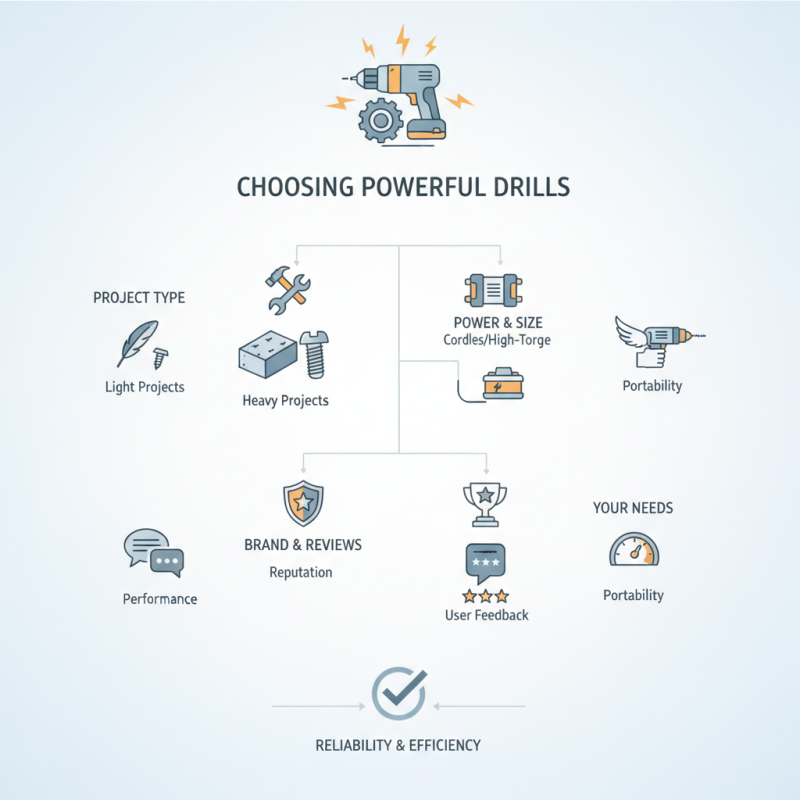
When selecting powerful drills, consider the specific tasks you will undertake. Do you need a lightweight tool for quick projects? Or a heavy-duty drill for tougher jobs? Each option has its merits and drawbacks. You may find yourself torn between performance and portability.
Don’t overlook the importance of brand reputation and customer reviews. A drill may look impressive, but its real-world performance speaks volumes. Reflect on your past experiences. Did your tools live up to their claims? This insight can guide you toward a more informed decision. Ultimately, the goal is to find powerful drills that meet your needs while providing reliability and efficiency.
Understanding Different Types of Drills for Various Projects
When it comes to drilling, understanding the various types of drills is essential. Each project requires specific tools to achieve the best results. For heavy-duty tasks like masonry, a hammer drill is often necessary. This drill uses a combination of rotational force and hammering action to penetrate tough materials. Choosing the right drill can make a significant difference in efficiency and outcome.
On the other hand, for woodworking projects, a regular electric drill or a cordless drill may suffice. These drills excel at creating precise holes in softer materials. However, they can struggle with harder surfaces. It’s vital to assess the materials involved in your project before selecting a drill type. Some users overlook the importance of drill bits. A poor-quality bit can negate the advantages of even the best drill.
Choosing drills also involves considering power sources. Corded drills provide consistent power but limit mobility. Cordless drills offer flexibility but may require frequent recharging. Misjudging these aspects leads to frustrations during projects. Taking time to evaluate your specific needs is crucial. The right drill can enhance productivity and improve overall project outcomes.
Evaluating Power and Performance Metrics of Drills
When evaluating power and performance metrics of drills, several key factors come into play. The torque output is crucial. It defines how much turning force the drill can generate. For most projects, a torque range of 30 to 60 Nm is optimal for efficient drilling. However, higher torque levels may be necessary for tougher materials, such as steel.
Speed is another critical aspect. Most drills operate at variable speeds between 400 to 2000 RPM. A higher RPM allows for faster drilling but might generate more heat. A balanced speed is important for maintaining drill bit integrity. Reports from industry standards suggest that a drill with adjustable speed settings can enhance versatility for various tasks.
Battery life and power source also matter. A drill that relies on lithium-ion batteries usually offers longer usage time, around 30% more than standard batteries. Yet, a heavy battery can offset the tool's maneuverability. A lighter, ergonomic design is necessary to prevent fatigue during extended use. Understanding these metrics enables one to choose the right drill for specific projects effectively.
Power and Performance Metrics of Drills
Key Features to Look for in a Powerful Drill
When selecting a powerful drill, several key features come into play. Power and torque are critical factors. A drill with higher torque often leads to better performance. According to a recent survey, professional contractors prefer drills with at least 700 inches-pounds of torque for heavy-duty tasks. This torque level effectively tackles tough materials like hardwood or metal.
Battery life is another essential aspect, especially for cordless drills. Most users report frustration due to batteries running out too quickly. A drill that offers at least two amp-hours (Ah) of battery life can deliver extended usage. Battery technology improvements have led to longer-lasting and faster-charging options, which is a significant advancement in efficiency and convenience.
Weight and design also affect usability. A lightweight drill reduces user fatigue during prolonged tasks. Many users find that drills under five pounds are much easier to handle. However, a lighter drill may compromise power. It’s crucial to evaluate which feature matters more for your specific needs. Balancing power, weight, and battery life can lead to better project outcomes and user satisfaction.
How to Choose Powerful Drills for Your Projects?
| Feature | Description | Importance |
| Power Rating | Measured in watts or volts, this indicates the drill's strength and capability to handle tough materials. | High |
| Chuck Size | Refers to the diameter of the drill bit that the chuck can hold, common sizes are 1/2" and 3/8". | Medium |
| Speed Settings | Multiple speed settings allow for versatility in drilling different materials. | High |
| Torque | Indicates the drill's ability to generate rotational force; higher torque is better for tough materials. | High |
| Battery Life (for cordless drills) | Duration the drill can operate on a single charge; essential for uninterrupted work. | Medium |
| Weight | Refers to the overall weight of the drill; lighter models are easier to handle for extended periods. | Medium |
| Grip | Ergonomic design improves comfort and reduces fatigue during use. | High |
Comparing Corded vs. Cordless Drills for Your Needs
When comparing corded and cordless drills, understanding their strengths is essential for any project. Corded drills provide uninterrupted power, making them ideal for heavy-duty tasks. Reports indicate that corded models typically deliver between 6 to 12 amps. This power output ensures efficiency for drilling into tough materials. However, their reliance on an electrical outlet limits mobility. The cords can also present safety hazards if not managed properly.
On the other hand, cordless drills enhance convenience, valued by many users. These models offer portability and ease of use, with many featuring lithium-ion batteries that hold charges well. Statistics show that cordless drills account for over 60% of the market share. This growth highlights their increasing popularity among DIY enthusiasts and professionals alike. Yet, they often fall short in terms of power compared to corded versions. Battery life can become a concern, especially during prolonged projects.
It’s important to weigh your specific needs. A heavy-duty job may require the relentless power of a corded drill. In contrast, a home project might benefit from the flexibility of a cordless option. Reflect on the tasks at hand and choose a drill that matches your requirements and comfort level.
Safety Considerations When Using Electric Drills
Using electric drills can be efficient for various projects, but safety must always be a priority. Before starting, inspect the drill for any visible damage. A compromised cord or worn-out parts can lead to accidents. Always wear safety goggles to shield your eyes from debris. Sound protection is also crucial, especially in a noisy environment. Even simple tasks can result in unexpected hazards.
When operating a drill, maintain a firm grip. Slipping can cause loss of control and injury. Consider using a clamp to secure your workpiece. This adds stability during drilling, allowing you to focus on the task. Additionally, it’s vital to use the right drill bit for the material. Using an incorrect bit can lead to binding or overheating, increasing the risk of injury.
Electric drills can be powerful tools in skilled hands. Yet, remember that even minor lapses in safety can lead to serious accidents. Always think ahead and plan your workspace. Clean your area before starting; small obstructions can cause trips or falls. Reflect on your past experiences; did you overlook a safety measure? Adopting a proactive approach will not only prevent injuries but also improve your overall project efficiency.