
• Parts
  • Services
  • OEM Equipment &
    Engineered Systems
  • EPC &
    Turnkey
  • Industries
    Served

How to Choose the Best China Delta Frequency Drive?

Choosing the best Delta Frequency Drive starts with the motor, load, and operating environment. It should not begin with price alone. A conveyor carrying heavy cartons needs different control behavior from a pump moving clean water. Speed range, starting torque, overload capacity, braking, enclosure rating, and communication protocols all matter.

The International Energy Agency reports that electric motor systems consume roughly half of global electricity. The U.S. Department of Energy also identifies motor systems as a major industrial energy-saving opportunity. In its motor-system efficiency research, energy-efficiency specialist Steven Nadel states, “Motor systems offer some of the largest energy-saving opportunities in industry.” That observation gives Delta Frequency Drive selection a wider purpose. The correct drive can reduce energy waste, stabilize production, and protect connected equipment.

Market research supports continued investment. MarketsandMarkets estimated the global variable-frequency-drive market at about USD 24 billion in 2024, with further growth expected through 2029. However, market growth does not make every model suitable. A high-power drive may be unnecessary for a lightly loaded fan. A low-cost model may also create unexpected losses, noise, or maintenance demands.

Field experience teaches a less comfortable lesson. Specifications can look impressive on paper. They may still fail beside a hot, dusty machine. This guide examines ratings, vector control, harmonics, cooling, safety functions, service support, and total ownership cost. It also considers a common mistake: choosing the drive before measuring the application. That decision deserves a second look.
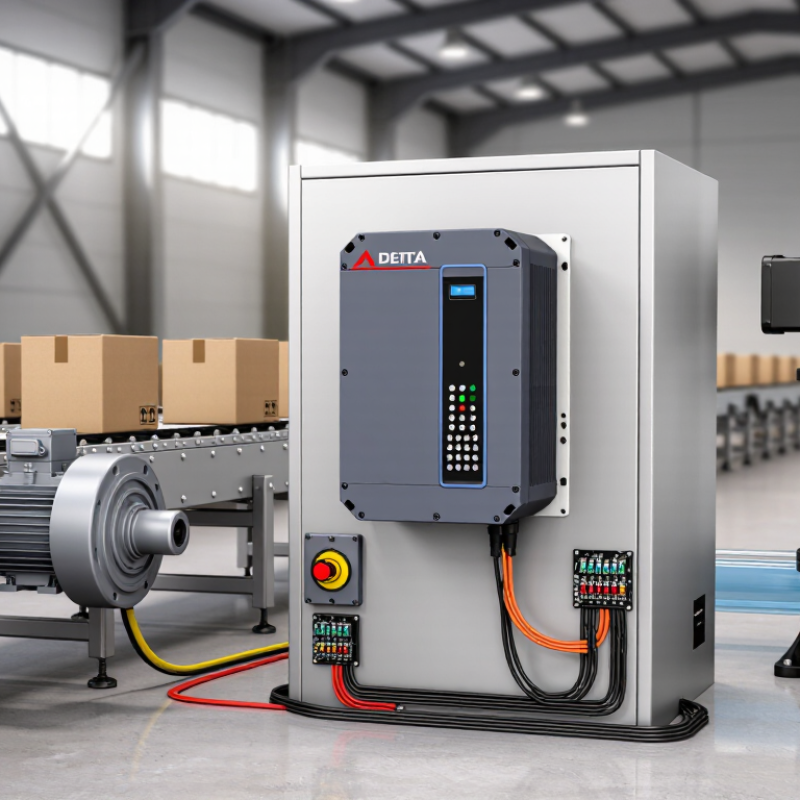
How to Choose the Best China Delta Frequency Drive?

Understanding China Delta Frequency Drive Types and Applications

How to Choose the Best China Delta Frequency Drive?

Understanding China Delta Frequency Drive Types and Applications

Choosing a China delta frequency drive starts with the motor and its working conditions. A basic V/F drive suits fans, pumps, and simple conveyors. It adjusts speed smoothly and usually offers an economical control solution. Sensorless vector drives provide stronger starting torque for mixers, feeders, and loaded conveyors. Closed-loop vector models support precise speed control when encoders are installed.

Check the motor voltage, rated current, overload capacity, and required speed range. A drive should not be selected by motor power alone. For dusty workshops, confirm the enclosure rating and cooling method. In high-temperature rooms, derating may be necessary. I have seen users choose a compact drive for a crusher application, then face repeated overcurrent alarms. The specification looked acceptable, but the starting load was underestimated.

Application details matter. Pump systems may need sleep functions and pressure feedback. Hoisting equipment requires braking control and suitable safety functions. CNC and winding machines demand tighter speed regulation. During commissioning, technicians should record acceleration time, current, temperature, and fault codes. Do not skip this step. Read the manual carefully, and verify local electrical requirements before installation. A technically suitable drive can still perform poorly when cable length, grounding, or parameter settings are ignored. Some choices remain uncertain until the machine runs under real production load.

Defining Motor, Load, and Operating Requirements

How to Choose the Best China Delta Frequency Drive?

Defining Motor, Load, and Operating Requirements

Start with the motor nameplate, not the machine seller’s recommendation. Record rated voltage, current, frequency, speed, power, and service factor. Match the drive by output current, not horsepower alone. A conveyor needs different control from a centrifugal pump. Constant-torque loads demand stronger low-speed performance, while variable-torque pumps may benefit from energy-saving control.

Load behavior matters. Measure starting torque, acceleration time, stopping frequency, and peak current during real operation.

The U.S. Department of Energy reports that motor systems consume about 68% of electricity in American manufacturing. Even small control errors can become expensive. The IEA has also reported that electric motor systems use more than 40% of global electricity. Efficiency is not a slogan.

Check the operating environment carefully. Dust, moisture, heat, altitude, and cabinet ventilation affect drive life. Confirm overload capacity, often 150% for one minute in heavy-duty applications, but verify the actual specification.

Long motor cables may require output filters. Braking resistors may be necessary for hoists or fast deceleration.

IEC 61800-9-2 provides a framework for evaluating drive-system efficiency, yet efficiency data alone cannot predict field performance.

A neat spreadsheet can still mislead. Test the selected drive with the actual motor and load, because installation conditions often expose assumptions.

Comparing Key Drive Specifications and Control Features

Selecting the best China delta frequency drive begins with matching specifications to the motor and working environment. Check rated voltage, output current, power range, and overload capacity. A drive should handle the motor’s full-load current, not only its horsepower label. Small differences matter.

For pumps and fans, basic V/F control may provide economical and stable operation. Conveyor systems, hoists, and mixers usually need sensorless vector control for stronger low-speed torque. Compare speed regulation, acceleration time, braking options, and built-in PID functions. A built-in PLC can simplify sequencing, while communication ports support monitoring through industrial networks. Confirm whether the drive offers suitable terminals for start, stop, fault reset, and speed reference signals.

Protection features deserve practical attention. Look for overcurrent, overvoltage, overheating, phase-loss, and short-circuit protection. Check the enclosure rating when dust or moisture is present. EMC performance also matters near sensors and control cables. During one installation, I selected a drive by power rating alone. The motor ran, but low-speed control was unstable. That mistake reminded me to compare control algorithms, feedback compatibility, and commissioning tools. Do not overlook documentation quality. Clear parameter names, wiring diagrams, fault codes, and update procedures reduce maintenance delays. Test the drive under real load conditions, because laboratory performance can appear better than field results. Availability of spare units and trained technical support may influence reliability more than a slightly lower purchase price.

How to Choose the Best China Delta Frequency Drive? - Comparing Key Drive Specifications and Control Features

Drive Configuration Typical Power Range Input and Output Control Method Typical Speed Accuracy Typical Overload Capacity Recommended Applications
Basic V/F Drive 0.4–22 kW Single-phase or three-phase AC input; three-phase AC output Constant V/F, programmable V/F curves Approximately ±1% of rated speed Typically 120% for 60 seconds Fans, pumps, conveyors, and applications with light starting torque
General-Purpose Sensorless Vector 0.75–315 kW Three-phase AC input; three-phase AC output V/F, sensorless vector, auto-tuning Approximately ±0.5% of rated speed Typically 150% for 60 seconds Material handling, mixers, machine tools, and general machinery
Heavy-Duty Sensorless Vector 1.5–500 kW Three-phase AC input; three-phase AC output Sensorless vector with torque compensation and motor auto-tuning Approximately ±0.5% of rated speed Typically 150% for 60 seconds or 180% for 3 seconds Cranes, extruders, crushers, hoists, and high-inertia loads
Closed-Loop Vector 2.2–500 kW Three-phase AC input; three-phase AC output Vector control with encoder feedback Approximately ±0.01% to ±0.1% of rated speed, depending on encoder and tuning Typically 150% for 60 seconds Winders, elevators, precision conveyors, and constant-torque machinery
Regenerative or Four-Quadrant Drive 5.5–500 kW Three-phase AC input; regenerative AC output Four-quadrant vector control with regenerative braking Approximately ±0.1% to ±0.5% of rated speed Typically 150% for 60 seconds Elevators, centrifuges, test benches, and frequent acceleration/deceleration systems
Selection Specification Common Options or Values Why It Matters Recommended Selection Guidance
Rated Voltage 200–240 V, 380–480 V, or 500–690 V AC classes The drive voltage class must match the available supply and motor nameplate voltage. Select the voltage class according to the measured supply voltage and local electrical standard.
Current Rating Normal-duty or heavy-duty current rating Motor current, rather than motor power alone, determines thermal compatibility. Choose a drive with continuous output current at least equal to the motor nameplate current.
Frequency Range Typically 0–400 Hz; some models support higher frequencies The usable range depends on motor design, mechanical limits, cooling, and application torque. Follow the motor manufacturer’s permitted operating-frequency range.
Acceleration and Deceleration Normally 0.1–6,000 seconds, depending on model and load Ramp time affects starting current, mechanical stress, and DC-bus overvoltage risk. Use longer ramps for high-inertia loads and add braking hardware when required.
Braking Method DC injection, built-in braking transistor, braking resistor, or regeneration Braking requirements depend on stopping time, load inertia, speed, and duty cycle. Use a braking resistor for frequent controlled stopping; use regeneration for substantial recurring energy return.
Communication RS-485, Modbus RTU, Ethernet-based protocols, or fieldbus options Communication enables remote parameter setting, monitoring, diagnostics, and coordinated control. Select the protocol supported by the PLC, HMI, SCADA, or motion-control system.
I/O and Feedback Digital inputs, relay outputs, 0–10 V, 4–20 mA, pulse input, encoder interface Adequate I/O simplifies integration with sensors, switches, interlocks, and speed references. Count all required signals before ordering and verify sinking or sourcing logic compatibility.
Protection Rating IP20 for control cabinets; higher IP ratings with suitable enclosures Protection against dust, moisture, and accidental contact depends on the complete installation enclosure. Use a suitable enclosure for dusty, wet, corrosive, or washdown environments.
Safety Functions STO, emergency-stop integration, fault relay, and configurable interlocks Safety functions can reduce unintended motor torque when correctly integrated into the machine safety system. Verify the required safety integrity level and installation requirements against applicable standards.
Applicable Standards IEC 61800-5-1, IEC 61800-3, IEC 61800-5-2, and relevant local certifications Standards address electrical safety, EMC, functional safety, and adjustable-speed drive requirements. Confirm the exact declaration, certification, and EMC category required for the installation location.
Note: The ranges shown are typical selection values for low-voltage adjustable-frequency drives. Final sizing must be verified using the motor nameplate current, load torque profile, overload duty, ambient temperature, installation altitude, braking requirements, and applicable electrical standards.

Checking Compatibility, Safety Standards, and Installation Needs

Choosing a China-made frequency drive begins with compatibility, not price. Match the drive’s rated output current with the motor nameplate current. Voltage, phase, frequency, and overload capacity must also agree. Small differences matter.

Check the control method. A pump may need smooth low-speed torque, while a conveyor may require stronger starting performance. Confirm whether the drive accepts digital inputs, analog signals, or a fieldbus connection. Review the motor cable length and braking requirements. I have seen selections fail because the enclosure rating was ignored. Dust, moisture, and heat can shorten service life quickly. Leave space around the drive for cooling.

Safety standards deserve careful attention. The installation should include protective fuses, a suitable disconnect, and reliable grounding. Check applicable electrical codes and the drive’s conformity with recognized industrial safety requirements, such as IEC 61800-5-1. Electromagnetic compatibility also matters near sensors or communication equipment. Do not place power cables beside delicate signal cables without proper separation. A qualified electrician should verify the supply, insulation, and fault protection before energizing the system.

Installation settings need equal care. Enter the motor’s real nameplate values, not estimated figures. Set acceleration, deceleration, current limits, and thermal protection for the actual load. Test the emergency stop separately. Watch for unusual noise, heat, or unstable speed during commissioning. It is tempting to trust factory parameters, but that shortcut can hide a poor match. Review the results after the first operating week.

How to Choose the Best China Delta Frequency Drive

Motor speed compatibility depends on the drive output frequency and the motor pole count. The chart shows synchronous speed calculated with n = 120 × f ÷ p; an induction motor normally runs slightly below this value because of slip.

Selection checks: Match the drive voltage, phase, rated current, motor frequency, overload capacity, and control method to the motor. Verify conformity with applicable IEC 61800-5-1 electrical safety requirements and IEC 61800-3 EMC requirements. Select the enclosure and cooling arrangement according to the installation environment, and provide suitable grounding, short-circuit protection, ventilation clearance, and shielding for motor cables.

Evaluating Supplier Quality, Support, and Total Operating Cost

Choosing the best China delta frequency drive requires more than comparing purchase prices. Supplier quality, technical support, and total operating cost often decide the real result. The International Energy Agency reports that electric motor systems consume roughly half of global electricity. Even a small efficiency difference can therefore affect monthly costs.

Ask suppliers for verified efficiency curves, thermal test records, and compliance certificates. Do not rely on a polished brochure alone. During factory evaluations, inspect wiring, cooling channels, terminal quality, and production traceability. A drive operating beside a dusty furnace faces different risks from one installed in a clean workshop. Check whether the supplier provides application engineering, remote diagnostics, spare parts, and response times in writing. Support matters most at 2 a.m.

Calculate total operating cost over five years. Include electricity, installation, filters, cooling, firmware updates, downtime, and technician training. The U.S. Department of Energy identifies motor-driven systems as a major share of industrial electricity use, so energy performance deserves careful measurement. Request field data from comparable loads, not only laboratory figures. Real installations are messier. Cable length, harmonics, overload cycles, and poor ventilation can reduce expected savings.

A low bid can still be expensive. Sometimes the missing cost is support. Compare warranty exclusions, local inventory, and repair procedures before selecting a supplier. Independent testing helps, but it is not perfect. References should include operating hours and failure history, not just customer logos. Industry experience suggests that transparent documentation is often a stronger quality signal than a dramatic efficiency claim.