
• Parts
  • Services
  • OEM Equipment &
    Engineered Systems
  • EPC &
    Turnkey
  • Industries
    Served

How to Choose the Best Custom Stainless Steel Coil?

Choosing the right Custom Stainless Steel Coil involves more than comparing prices or surface finishes. The best option must match your forming process, environment, dimensions, and production goals. A coil used for kitchen equipment may need different properties from one used in automotive panels or chemical processing.

Start by defining the stainless steel grade. Austenitic grades, such as 304 and 316L, offer strong corrosion resistance and reliable formability. Grade 316L may perform better near saltwater or aggressive chemicals. However, it usually costs more. Thickness, width, coil weight, hardness, and edge condition also affect performance. Small differences can create serious problems during stamping, slitting, or welding.

Look closely at the surface.

A bright finish may suit visible components, while a brushed finish can hide minor marks. Request mill test certificates, dimensional reports, and material traceability records. A dependable supplier should explain standards, tolerances, packaging, and inspection methods clearly. ISO-based quality systems can provide useful evidence, but certificates alone do not guarantee consistent results.

Supplier evaluation requires practical questions. Can the manufacturer provide samples from the intended production route? How does it control flatness and thickness variation? What happens when a coil fails inspection? These answers reveal more than a polished sales presentation. A perfect choice rarely exists. Cost, lead time, corrosion resistance, and appearance may conflict. Review real operating conditions before making a decision. The right Custom Stainless Steel Coil is the one that performs reliably, fits your equipment, and remains commercially sensible over time.
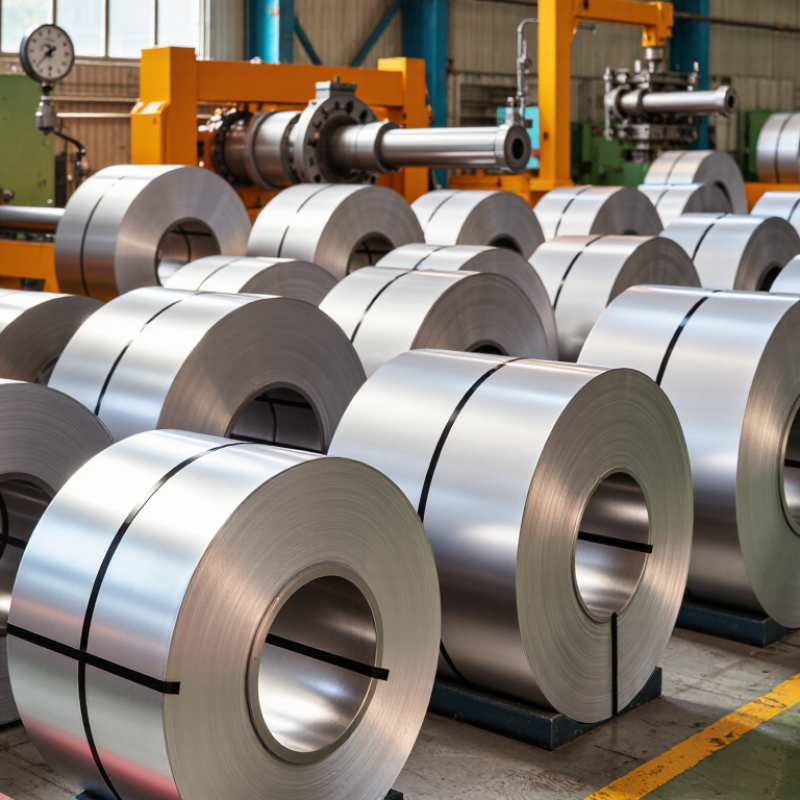
How to Choose the Best Custom Stainless Steel Coil?

Define Your Custom Stainless Steel Coil Requirements

How to Choose the Best Custom Stainless Steel Coil?

Define Your Custom Stainless Steel Coil Requirements

Choosing a custom stainless steel coil starts with the application, not the surface appearance. Describe the product’s working environment clearly. Will it face moisture, heat, chemicals, or repeated bending? These details help determine the suitable stainless steel grade. Specify thickness, width, coil weight, inner diameter, outer diameter, and required length. Tolerance matters too. A beautiful coil can still fail if its dimensions drift during production.

Tips: Prepare a simple requirement sheet before contacting a supplier. Include the grade, thickness range, width tolerance, surface finish, edge condition, and estimated annual volume. Add drawings when possible. A small sketch may prevent a costly misunderstanding. Ask for inspection records, chemical composition data, mechanical results, and a sample approval process. Do not rely on verbal promises alone.

Think about forming and processing conditions. Cold rolling, stamping, slitting, and welding each place different demands on the material. Explain whether the coil will be polished, painted, cut, or deep-drawn. I have seen projects specify a bright finish while ignoring flatness. That oversight later caused feeding problems. It is easy to miss. Request clear packaging details and protection against scratches, moisture, and edge damage. Review every number twice. Even experienced buyers occasionally overlook coil weight limits or delivery tolerances.

Compare Stainless Steel Grades and Corrosion Resistance

Choosing the right custom stainless steel coil starts with its corrosion environment, not its appearance. Grade 304 suits many indoor applications, food equipment, and dry architectural components. It performs well in ordinary air and freshwater. However, salt spray, coastal humidity, and cleaning chemicals can cause pitting. Small surface damage may become a serious weak point.

Grade 316L contains molybdenum, which improves resistance to chlorides and many chemical solutions. Its lower carbon content also reduces corrosion risks around welded areas. This makes it a practical choice for marine equipment, medical components, and outdoor processing systems. Still, 316L is not corrosion-proof. Poor drainage, tight crevices, and contaminated tools can defeat its advantages. Cost alone is a poor selection method.

For severe chloride exposure or higher mechanical demands, duplex 2205 may offer stronger resistance and greater strength than common austenitic grades. Ferritic 430 can be economical for decorative indoor parts, but it usually needs better environmental control. One detail is easy to miss: coil finish matters. A smooth, properly annealed surface is easier to clean and less likely to retain corrosive deposits. Check the required thickness, edge condition, heat treatment, and surface finish with the supplier. Request material certificates and corrosion-test data when the service environment is uncertain. I would also test a sample in realistic conditions, because laboratory data cannot fully reproduce every joint, scratch, or cleaning cycle.

How to Choose the Best Custom Stainless Steel Coil?

Comparing Stainless Steel Grades by Relative Pitting Corrosion Resistance

PREN, or Pitting Resistance Equivalent Number, is a widely used comparative indicator calculated from chromium, molybdenum, and nitrogen content. Higher values generally indicate better resistance to localized corrosion, especially in chloride-containing environments. Actual coil performance also depends on temperature, chloride concentration, fabrication quality, surface finish, and heat treatment.

Representative PREN values: 430 ≈ 16, 304 ≈ 19, 316L ≈ 24, 2205 Duplex ≈ 35, and 904L ≈ 36. Use these values for initial material selection and confirm suitability against the operating environment.

Evaluate Coil Dimensions, Thickness, and Surface Finish

Choosing custom stainless steel coil starts with its final use, not a generic stock size. Measure the required width, outside diameter, inside diameter, and coil weight. A narrow slitting line may reject a coil that is only a few millimeters too wide. Confirm allowable width and thickness tolerances in writing. These details affect feeding stability, storage, and material yield. I have seen projects lose material because the requested width ignored edge trim.

Thickness deserves more than a nominal number. Specify the target gauge, acceptable deviation, and measurement method. A micrometer check at several points can reveal crown, edge variation, or local thinning. Thin coil may improve forming efficiency, but it can buckle around sharp bends. Heavier material adds stiffness and may require greater press force. Do not assume thicker always means stronger; grade, temper, and forming direction also matter. This is where a quick design shortcut can become expensive.

Surface finish must match appearance and performance. Define the finish, roughness range, grain direction, and protective film requirement. A smooth surface can support cleanroom panels, while a textured finish may hide handling marks on equipment covers. Inspect sample strips under the intended lighting. Office lighting can conceal scratches. Request inspection records, coil identification, and a material certificate before shipment. I would also check the first delivered coil against the approved sample, because written specifications sometimes miss a detail that operators notice immediately.

Assess Manufacturing Quality, Standards, and Customization Options

How to Choose the Best Custom Stainless Steel Coil?

Assess Manufacturing Quality, Standards, and Customization Options

Global demand makes supplier selection more critical. World Stainless reported 58.4 million tonnes of crude stainless steel production in 2023. This scale does not guarantee consistent coil quality. Ask for the heat number, chemical analysis, tensile results, and thickness records. A mill test certificate should match the delivered coil through clear traceability.

Check whether the material follows the required specification, such as ASTM A240 or EN 10088. For quality systems, ISO 9001 certification supports controlled production, but it is not proof of perfect material. Request EN 10204 3.1 inspection documents when your application requires independent test evidence.

Verify surface finish, flatness, edge condition, and thickness tolerance. A polished surface can mislead.

Customization Must Be Measurable

Customization must be measurable. Confirm:

  • grade
  • width
  • thickness
  • coil weight
  • inner diameter
  • outer diameter
  • slit width
  • protective packaging

For food equipment, medical components, or outdoor structures, discuss corrosion exposure before choosing 304 or 316-type stainless steel. In my experience, small edge burrs can disrupt stamping lines and create costly delays. Ask for sample coils or inspection photos. Do not rely only on a catalog.

One Detail Is Often Missed: Packing Quality

Moisture trapped beneath damaged wrapping may stain the surface during transport. I would also review nonconformance procedures and response times. A supplier can meet the standard yet still handle problems poorly. That deserves scrutiny.

Review Supplier Capabilities, Pricing, and Delivery Terms

How to Choose the Best Custom Stainless Steel Coil?

A capable supplier should understand more than grade and thickness. Ask about slitting accuracy, edge quality, surface finish, annealing, and coil weight limits. Request mill test reports and inspection records for every production lot. These documents show chemical composition, mechanical properties, and traceability. A practical supplier should also explain its equipment limits honestly. I once accepted a low-cost quote without checking tolerance capability. The coils required extra processing later.

Pricing deserves careful review. Compare material grade, thickness, width, quantity, tooling, packaging, and inspection charges. Ask whether alloy surcharges can change before shipment. A clear quotation should state payment terms, quote validity, taxes, and transportation costs. The cheapest offer may create more waste. Request a sample or trial coil when tolerances are critical. That small step can expose waviness, uneven edges, or inconsistent hardness.

Tips: Confirm production capacity before placing a large order. Ask for a realistic manufacturing schedule, not an attractive promise. Review the agreed delivery term, shipping responsibility, and destination port. Clarify what happens if production is delayed. A supplier with backup equipment may reduce risk, but this should be verified. Keep written approval for drawings, packaging, coil direction, and labeling. I still prefer a slightly longer lead time when communication is precise. Speed sounds useful, until a missed shipment stops your line.

How to Choose the Best Custom Stainless Steel Coil? - Review Supplier Capabilities, Pricing, and Delivery Terms

Evaluation Dimension Typical Market Range or Requirement What a Capable Supplier Should Provide Recommended Review Point
Available Stainless Grades Common grades include 304/304L, 316/316L, 321, 409, 430, and duplex grades such as 2205. Material certificates showing chemical composition and mechanical properties in accordance with the specified standard. Confirm grade availability, low-carbon variants, corrosion requirements, and suitability for welding or forming.
Applicable Standards Frequently used specifications include ASTM A240, ASTM A480, EN 10088, JIS G4304, and equivalent national standards. A quotation and inspection plan that clearly state the governing standard, product form, tolerances, and test requirements. Do not accept “equivalent material” wording without written confirmation of chemical, mechanical, and dimensional compliance.
Thickness Capability Many service centers supply precision coil from approximately 0.03 mm to 3.00 mm; heavier gauges may require specialized processing. Validated rolling, slitting, annealing, and leveling capability for the requested thickness and tolerance. Ask for actual achievable tolerance rather than only the nominal thickness range.
Width and Slitting Slit widths commonly range from narrow strips of a few millimeters to approximately 1,500–2,000 mm master-coil widths, depending on equipment. Slitting plans, edge-condition controls, burr limits, width tolerances, and coil winding specifications. Check minimum slit width, maximum coil weight, inside diameter, outside diameter, and edge quality.
Surface Finish Common finishes include 2B, BA, No. 1, No. 3, No. 4, and hairline, depending on grade and processing route. Finish samples, surface inspection criteria, protective film options, and controls for scratches, pits, stains, and roll marks. Define finish by recognized designation and approved sample instead of using subjective terms such as “bright” or “premium.”
Dimensional Tolerance Standard tolerances vary by thickness, width, grade, and specification; precision orders may require tighter custom limits. A measurable tolerance table covering thickness, width, camber, flatness, burr height, and coil shape. Compare the supplier’s guaranteed tolerance with the actual requirements of stamping, roll forming, or fabrication.
Mechanical and Metallurgical Testing Typical tests may include tensile strength, yield strength, elongation, hardness, chemical analysis, and intergranular corrosion testing where applicable. Mill test certificates, heat-number traceability, calibration records, and third-party inspection support when required. Ensure the test method and acceptance criteria match the purchase specification.
Indicative Pricing Basis Pricing is normally quoted per metric ton or kilogram and changes with grade, thickness, finish, width, quantity, processing, and market conditions. A line-item quotation separating base material, conversion, slitting, inspection, packaging, tooling, freight, duties, and taxes. Compare quotations using the same grade, dimensions, Incoterm, quantity, payment terms, and validity period.
Minimum Order Quantity Stock sizes may be available in small quantities, while custom rolling or special finishes often require a larger minimum order. Clear minimum order rules for master coils, slit coils, trial orders, and repeat production. Confirm whether a small trial lot carries setup charges or a higher conversion cost.
Production Lead Time Stock material may ship within several business days; custom processing commonly requires about 2–8 weeks, depending on workload and specifications. A written schedule covering order confirmation, raw-material allocation, processing, inspection, packing, and dispatch. Request separate estimates for first production and repeat orders; custom tooling or imported feedstock may extend the schedule.
Sample and Approval Process Sample timing commonly ranges from several days for stocked material to several weeks for custom finishing or processing. Documented sample approval, finish references, dimensional reports, and retention samples for production comparison. Approve both appearance and measurable dimensions before mass production.
Packaging and Coil Protection Export packaging may include waterproof paper, steel or plastic strapping, edge protectors, wooden supports, and eye-to-side or eye-to-sky orientation. Packaging drawings, coil weight limits, corrosion protection, lifting instructions, and container-loading photographs where appropriate. Match the package to the transport route, storage duration, humidity exposure, and unloading equipment.
Delivery Terms Common Incoterms include EXW, FCA, FOB, CFR, CIF, and DAP; responsibility for freight, insurance, and customs changes with each term. A quotation stating the named place, transfer of risk, insurance responsibility, export documentation, and estimated transit time. Compare total landed cost, not only the material price shown on the quotation.
Quality Claims and Warranty Claims are generally subject to visible-damage reporting, inspection evidence, heat-number traceability, and agreed notification periods. Written nonconformance procedures, replacement or credit terms, inspection responsibilities, and defined claim deadlines. Clarify responsibility for transit damage, hidden defects, dimensional deviations, and rejected material.
Payment and Price Validity Common arrangements include deposit and balance, documentary payment, or credit terms subject to qualification; validity is often limited because alloy surcharges and freight rates fluctuate. Defined payment milestones, currency, bank charges, price-adjustment mechanism, and quotation-expiry date. Confirm whether the price is fixed through shipment and whether changes in raw-material or freight costs can be passed through.

Note: Price and lead-time ranges are indicative industry benchmarks only. Final terms should be confirmed in a written quotation based on grade, dimensions, quantity, finish, inspection requirements, destination, and applicable trade terms.