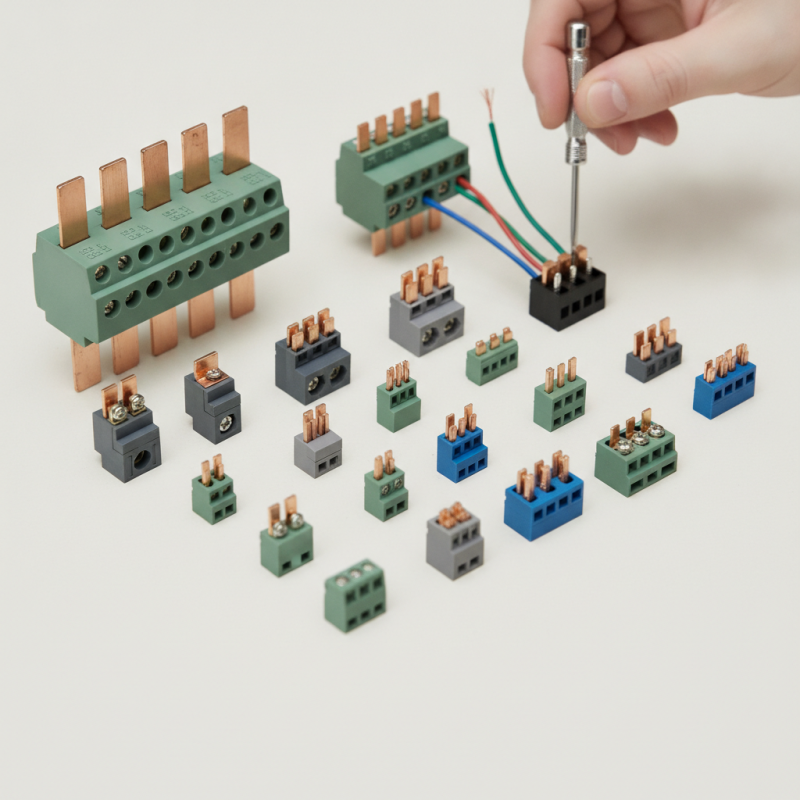
How to Select the Right Screw Type Terminal Blocks for Your Needs?
When it comes to electrical connections, selecting the right Screw-Type Terminal Blocks is crucial. These components ensure secure and reliable connectivity. However, many factors influence this choice. Understanding your specific needs can be overwhelming.
Screw-Type Terminal Blocks come in various styles and sizes. Each type has unique features tailored for different applications. For example, some are designed for high current loads, while others are ideal for compact spaces. Ignoring these details can lead to inefficient connections or even system failures.
The expertise in choosing the right terminal block lies in assessing your project’s requirements. Consider load types, environment, and installation ease. This journey may involve trial and error, but it ultimately leads to better results. Aim to make informed decisions, balancing quality with your specific application needs.
Understanding the Basics of Screw Type Terminal Blocks and Their Applications
Screw type terminal blocks are essential components in electrical circuits. They provide a reliable connection for wires, ensuring safe and efficient electrical flow. Understanding their structure is key. These blocks typically feature metal screws that secure the wires in place. This mechanism allows for easy installation and maintenance.
When selecting screw type terminal blocks, consider the specific application. The gauge of the wire plays a crucial role. For heavier loads, choose blocks designed for thicker wires. However, some users overlook this. Using the wrong gauge can lead to electrical failures.
Another aspect to ponder is the mounting type. Many options exist, such as panel-mounted or PCB-mounted blocks. Each type has unique benefits. It's important to match the terminal block with your project requirements. Ignoring this can complicate your setup. Proper research is vital for effective decision-making.
How to Select the Right Screw Type Terminal Blocks for Your Needs?
| Terminal Block Type | Conductor Size (AWG) | Rated Voltage (V) | Rated Current (A) | Material | Application |
| Feed-Through | 22 - 10 | 300 | 20 | Polyamide | Electrical Panels |
| Disconnect | 24 - 12 | 600 | 30 | Phenolic | Industrial Machinery |
| Test | 26 - 14 | 250 | 10 | Brass | Testing Equipment |
| Distribution | 20 - 8 | 500 | 40 | Nylon | Building Wiring |
| PCB Mount | 28 - 16 | 100 | 5 | Copper | Consumer Electronics |
Key Factors to Consider for Selecting Screw Type Terminal Blocks
Selecting the right screw type terminal blocks is crucial for ensuring successful connections in electrical applications. Key factors to consider include the block's material, wire size compatibility, and mounting options. For instance, glass-filled nylon blocks offer durability and resistance to high temperatures, making them a solid choice for industrial settings. According to a report by the National Electrical Manufacturers Association, more than 80% of electrical failures are due to poor connections.
When choosing terminal blocks, gauge the wire sizes they can accommodate. It’s essential to match terminal blocks with specific wire gauges to prevent overheating and maintain safe operations. The American National Standards Institute emphasizes that improper sizing can lead to increased resistance and, ultimately, equipment failure.
Tip: Always check the block's voltage rating. Ensure it aligns with your project's requirements.
Another aspect to contemplate is the mounting style. Options include panel-mounted or DIN rail-mounted blocks. Each type serves a unique need depending on your installation setup. Review the space available and the layout of your project.
Tip: Opt for modular blocks to allow future scalability in your projects.
Carefully weighing these factors ensures effective connections and enhances system reliability. Remember, a small oversight can result in costly downtime.
Comparative Analysis of Different Screw Type Terminal Block Materials and Ratings
When selecting screw type terminal blocks, the material and ratings are crucial. Common materials include nylon, polycarbonate, and metal. Each material has its strengths and weaknesses. For example, nylon is lightweight but may not withstand high temperatures. Polycarbonate offers better heat resistance but can be more brittle. Consider the environmental conditions your terminal blocks will face.
Ratings are equally important. Look for voltage and current ratings that meet your specific application needs. Pay attention to the insulation resistance and dielectric strength. Inadequate ratings can lead to failures. Testing different materials in your application can reveal hidden issues. Don't rely solely on manufacturer claims; real-world performance varies.
It's essential to consider the installation environment. If your blocks are exposed to moisture, choose materials designed for such conditions. Regular inspection for wear or damage can help maintain reliability. Engaging with industry professionals might provide insights, but always verify their claims. Balancing longevity and cost will help in making the right choice.
Standard Sizes and Formats of Screw Type Terminal Blocks in Electrical Systems
When selecting screw type terminal blocks for electrical systems, understanding standard sizes and formats is crucial. These components come in various dimensions, often defined by the pin spacing. Common pin spacings include 3.5 mm, 5 mm, and 7.5 mm. According to recent industry reports, the global terminal block market is expected to reach $10 billion by 2026, reflecting the growing need for reliable connections in electrical installations.
Various formats of screw type terminal blocks include single and multi-level configurations. Single-level blocks typically handle lower current loads, while multi-level designs accommodate more complex wiring. It’s essential to consider the specific requirements of your application. For example, if a tightly packed circuit board is needed, multi-level blocks are usually a better choice.
Tips: Always verify the voltage and current ratings of your chosen blocks to avoid overheating. Choosing the wrong type can lead to failures, impacting the entire system. Remember to assess the physical dimensions alongside voltage needs. Sizing errors can lead to inadequate space and connectivity issues. Stay updated on manufacturer guidelines and best practices to ensure safe usage.
Best Practices for Installation and Maintenance of Screw Type Terminal Blocks
When it comes to installing screw type terminal blocks, attention to detail is crucial.
Ensure all connections are secure and properly tightened. Loose connections can lead to poor performance and even equipment failure. It’s wise to use a torque screwdriver. This helps achieve consistent fastening without over-tightening, which can damage the terminals.
Routine maintenance is equally important. Regularly check for signs of wear or corrosion. These problems can affect electrical conductivity. Cleaning connections with an appropriate solvent can prevent these issues. Remember, even small particles can disrupt performance.
Documentation is vital. Keep track of your installation procedures and any maintenance performed. This creates a reliable reference for future needs. Review your installation occasionally. Changes in environment or usage can necessitate adjustments. Being proactive can save time and resources in the long run.