
• Parts
  • Services
  • OEM Equipment &
    Engineered Systems
  • EPC &
    Turnkey
  • Industries
    Served

Top 10 Abc Cable Manufacturers for Global Buyers?

Choosing the right Abc Cable manufacturer can shape a project’s safety, budget, and delivery schedule. Global buyers often compare suppliers by price alone. That approach can create expensive problems later. A cable may look identical in a product image, yet differ in conductor quality, insulation thickness, testing, and traceability.

This guide reviews ten Abc Cable manufacturers serving international buyers. The evaluation considers production capacity, material control, certification practices, customization, export experience, and after-sales support. It also examines practical details, such as factory testing records, sample consistency, packaging strength, and response times during technical discussions. These details matter when cables travel across long distances or operate in demanding environments.

Quality comes first.

Reliable manufacturers should explain their standards clearly. They should provide verifiable documents, not vague promises. Buyers should also confirm voltage ratings, conductor materials, temperature limits, and applicable regional requirements before placing an order. One supplier may excel at large infrastructure projects, while another may handle smaller customized batches more effectively. There is no perfect manufacturer for every buyer.

Some rankings remain subjective. Market information can change, and public company data is not always complete. Therefore, this overview should support supplier research rather than replace factory audits or independent testing. Careful buyers will request samples, review inspection procedures, and clarify warranty terms before signing contracts. A short conversation with an engineer may reveal more than a polished brochure.
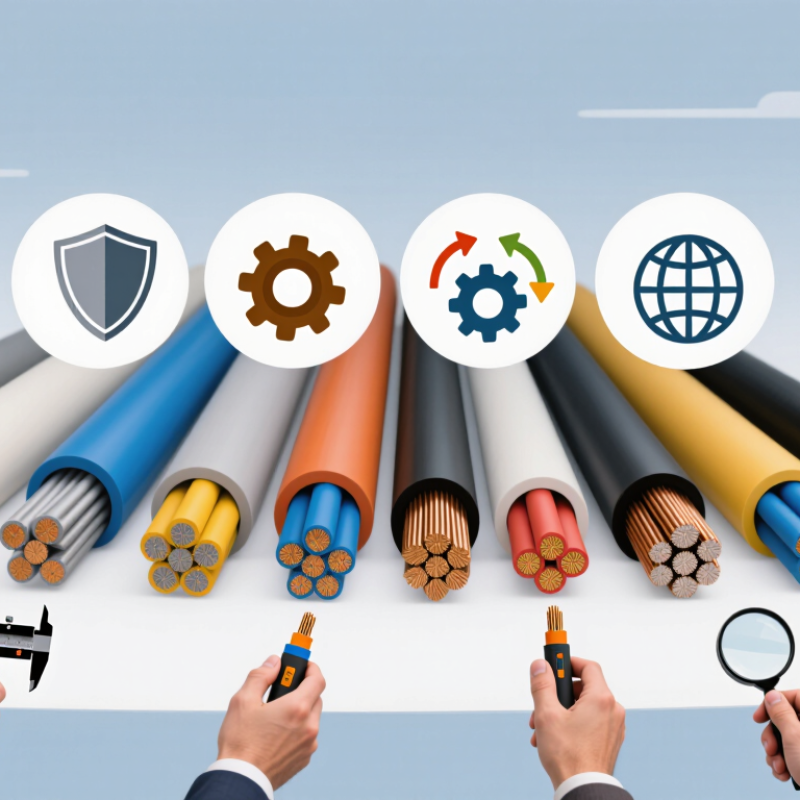
Top 10 Abc Cable Manufacturers for Global Buyers?

ABC Cable: Definition, Applications, and Global Market Overview

ABC cable, or aerial bundled cable, groups insulated conductors around a supporting messenger or neutral. Unlike bare overhead lines, its compact profile reduces accidental contact and branch interference. Utilities use it for dense streets, rural extensions, service drops, and network upgrades. The design also limits corridor width. Yet insulation does not remove every hazard; installation quality still controls performance.

The global need is substantial. The World Bank’s Tracking SDG7: Energy Progress Report 2024 recorded about 685 million people without electricity in 2022. Many new connections need affordable, low-maintenance distribution. The IEA’s Electricity 2024 analysis expects worldwide electricity demand to grow by an average 3.4% yearly through 2026. This growth increases pressure on secondary networks, especially where poles face storms, vegetation, or crowded roads. Market forecasts differ because analysts classify ABC, insulated overhead conductors, and accessories differently. That inconsistency deserves attention.

Tips: Global buyers should verify conductor material, insulation rating, messenger strength, voltage class, UV resistance, and local installation standards. Ask for routine-test records and declared current capacity. Compare lifecycle cost, not only purchase price. Inspect connector compatibility, too. A strong cable can still fail at a weak joint. ABC is efficient, but not magical. Designers should allow for heat, wind, sag, and future load. One overlooked detail can erase the expected savings.

How to Evaluate the Top 10 ABC Cable Manufacturers

How should global buyers evaluate the top 10 ABC cable manufacturers? Start with evidence, not search rankings. The IEA’s 2023 Electricity Grids and Secure Energy Transitions report estimates that 80 million kilometres of grids must be added or refurbished by 2040. It also calls for annual grid investment to rise toward USD 600 billion. This pressure makes consistent, scalable ABC cable production more important than attractive pricing.

For each manufacturer, request a technical file covering conductor material, cross-sectional area, voltage rating, XLPE insulation, neutral design, and current-carrying capacity. Compare test results with IEC 60502-1 and local project requirements. Ask for routine and type-test reports from an ISO/IEC 17025-accredited laboratory. Check UV resistance, abrasion performance, thermal ageing, and short-circuit behavior. Small details matter. A missing test date should delay approval.

Factory evaluation should examine incoming-material records, extrusion controls, batch traceability, calibration, and defect handling. Sample cable from current production, not only from a showroom. Review delivery history, minimum order quantities, warranty terms, and cross-border technical support. Total cost includes failed installation, replacement joints, and downtime. I would also score financial stability and response time. A polished brochure is not evidence. My scoring can still be imperfect; field conditions and regional standards may change the result. Recheck the shortlist before issuing a contract.

Top 10 ABC Cable Manufacturers by Products and Global Reach

Top 10 ABC Cable Manufacturers by Products and Global Reach

The top ten ABC cable manufacturers serve different project needs, so product range matters as much as factory size. Leading producers typically offer aerial bundled cables, insulated conductors, service drop cables, and medium-voltage accessories. Some focus on compact urban networks, while others build heavy-duty lines for rural transmission. Their products usually support aluminum conductors, cross-linked insulation, weather-resistant jackets, and customized neutral designs. A reliable supplier should provide type-test reports, routine-test records, production traceability, and clear conductor specifications.

Global reach also separates strong manufacturers from ordinary exporters. The most capable suppliers maintain distribution networks across Asia, Africa, Europe, the Middle East, and the Americas. They understand local voltage systems, installation practices, packaging needs, and import documentation. Several provide private labeling, sample testing, technical drawings, and flexible minimum order quantities. That practical support can reduce delays at ports and construction sites. It is not glamorous, but it matters.

Buyers should compare the ten candidates by factory capacity, delivery history, laboratory control, and after-sales response. A polished catalog proves little. Independent inspection remains useful. I would also check conductor resistance and insulation thickness before signing a large order. Rankings can change quickly when raw material prices, certifications, or logistics conditions shift. My own assessment would need regular review, because global reach is not always equal to dependable service.

Quality Standards, Certifications, and Manufacturing Capabilities

Top 10 ABC Cable Manufacturers for Global Buyers

Quality Standards, Certifications, and Manufacturing Capabilities

Choosing an ABC cable manufacturer requires more than comparing prices. Buyers should verify conductor materials, insulation compounds, strand construction, and rated voltage. Reliable factories normally operate under ISO 9001 quality systems. Environmental controls may follow ISO 14001. These certifications matter, but they do not replace product testing.

Ask for current test reports covering tensile strength, insulation resistance, aging performance, and resistance to ultraviolet exposure. International projects may require IEC standards, while some markets also request national approvals. Check whether certificates match the actual factory and cable design. A trading office cannot replace manufacturing evidence.

Manufacturing capability is equally important. Inspectors should review drawing machines, stranding lines, extrusion equipment, and routine testing areas. Automatic diameter controls can reduce insulation variation. Clean storage protects aluminum conductors from moisture and contamination. Traceability should connect each reel to raw materials, operators, and test results.

Details reveal competence. Can the manufacturer produce different cross-sections without frequent delays? Can it provide wooden drums suitable for long-distance shipping? Can engineers adjust designs for temperature, span length, or installation conditions?

I have found that polished documents sometimes hide weak process control. Factory audits can still miss problems. Independent sampling helps. A strong supplier welcomes technical questions, admits production limits, and corrects defects through documented procedures. Reliability is built through evidence, not confident promises.

Buying Considerations for Global ABC Cable Importers

Global buyers comparing ABC cable manufacturers should look beyond quoted price. Confirm the rated voltage, conductor material, insulation type, and applicable test standards match the project specification. Ask for technical datasheets and recent routine-test records, not just a general product brochure. Small details matter.

Check the cable’s intended installation conditions. Temperature, sunlight exposure, humidity, and span length can affect material selection and service life. Clarify conductor size, messenger-wire construction, packaging, and drum dimensions before placing an order.

Request sample markings and confirm that cable labels match the shipping documents. A spreadsheet can look convincing, yet still miss a mismatch between the tested sample and the production batch. That risk deserves attention.

Tips: Ask manufacturers how they trace batches and handle inspection findings. Agree on pre-shipment checks, document formats, and packaging requirements in writing. For long-distance transport, confirm drum protection and storage guidance; damaged cable ends are easy to overlook until installation. Compare lead times against production capacity, and allow room for sampling or retesting. Ask for evidence. Also, revisit your assumptions: the lowest offer may not include the same tests, packaging, or delivery terms.