
• Parts
  • Services
  • OEM Equipment &
    Engineered Systems
  • EPC &
    Turnkey
  • Industries
    Served

Why Choose an Electric Coolant Heater?

Why Choose an Electric Coolant Heater?

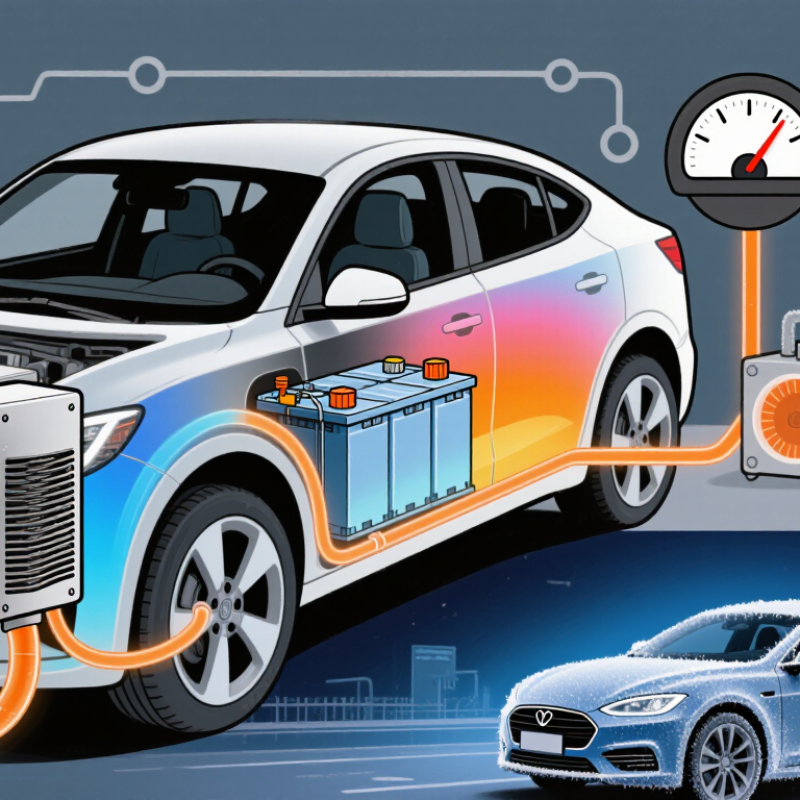
An Electric Coolant Heater gives electric vehicles controlled warmth without relying on engine waste heat. That difference matters on freezing mornings. When the vehicle is parked overnight, the heater can warm coolant before driving begins. The cabin responds sooner. Battery temperature can also reach a more useful operating range.

Dr. David Howey, a battery-systems researcher at the University of Oxford, offers a relevant perspective: “Temperature control is central to battery performance, safety, and life.” His observation explains why coolant heating deserves more attention than a simple comfort feature. A properly sized Electric Coolant Heater can support cabin heating, battery conditioning, and more consistent vehicle operation. In a workshop, this may mean checking voltage stability, coolant flow, heater placement, and control-system compatibility. Small details matter.

Cold weather is unforgiving.

The benefits are not automatic, however. An inefficient heater can increase electrical consumption and reduce driving range. Poor installation may create uneven heating or unnecessary service problems. Engineers must balance thermal output, energy use, response time, and long-term durability. Vehicle owners should also consider insulation, climate, charging habits, and maintenance access. One limitation is easy to overlook: heating the coolant does not solve every cold-weather challenge. It is only one part of a wider thermal-management strategy. Still, when matched correctly to the vehicle, an Electric Coolant Heater offers a practical path toward faster warm-up, steadier battery performance, and a more predictable driving experience. Performance depends on the details. That is where careful evaluation begins.
Why Choose an Electric Coolant Heater?

What Is an Electric Coolant Heater?

Why Choose an Electric Coolant Heater?

An electric coolant heater is a compact device that warms liquid in a vehicle’s thermal circuit. It usually uses resistive or PTC heating elements. The heated coolant then flows through the cabin heater core or battery cooling plate. This creates controlled heat without burning fuel inside the vehicle.

The system works like a small, managed boiler. Sensors monitor coolant temperature, battery condition, cabin demand, and outside air. A controller adjusts power instead of simply switching heat on continuously. This matters because battery temperature affects charging speed, efficiency, and service life. The International Energy Agency reported that global electric car sales exceeded 17 million in 2024, increasing demand for precise thermal management. Cold weather remains difficult. AAA testing found that freezing conditions and cabin heating could reduce electric vehicle range by more than 40%. The exact loss varies by vehicle, speed, and weather. That detail is often overlooked.

Tips: Check the heater’s voltage, output, coolant compatibility, and control strategy. Insulate coolant lines near the radiator and underbody. Preheating while connected to external power can preserve driving energy. Do not assume maximum heater power is always better. It may warm the cabin faster, but it can increase battery consumption sharply. In practice, a balanced setting often feels more efficient, although real-world results still need measurement.

How Does an Electric Coolant Heater Work?

An electric coolant heater warms the liquid circulating through an engine or battery thermal system. It uses electrical resistance, much like a controlled heating element, to transfer heat into the coolant. A built-in sensor monitors temperature and limits output when the fluid approaches its set point. Some units include a small pump, while others rely on natural circulation through carefully positioned hoses. This difference matters during installation and service.

When power is applied, the element raises coolant temperature inside a metal chamber. The warmed fluid then travels through the engine block, cabin heater core, or battery cooling plates. As it circulates, it reduces cold-start strain and can provide cabin heat sooner. A controller may start and stop the heater repeatedly, preventing overheating and limiting energy use. The effect is gradual.

A practical inspection should confirm coolant level, hose flow, electrical protection, and secure connections. A heater may draw substantial current, so the circuit needs correctly rated wiring and fuses. Do not judge performance only by a warm hose. Air pockets, weak circulation, or a faulty sensor can leave the engine cold. This is where the explanation becomes less tidy: efficient heating depends on system design, weather, coolant condition, and control settings. In practice, useful heating depends on parking time and available electrical capacity. It should not be judged by speed alone.

Why Choose an Electric Coolant Heater? - How Does an Electric Coolant Heater Work?

A practical overview of operating principles, typical specifications, performance factors, and application benefits.

Category Dimension or Parameter Typical Data How It Works or Why It Matters
Operating Principle
Energy conversion Electrical energy to heat Approximately 1 kWh of electricity produces 1 kWh of resistive heat, before system losses An electric heating element transfers heat directly to the coolant. Unlike a heat pump, it does not move heat from another source.
Heat-transfer medium Water-glycol coolant Common mixtures include approximately 30%–50% glycol by volume, depending on freeze protection requirements The coolant carries heat through the engine, battery, fuel-cell stack, cabin heater, or other thermal circuit.
Circulation method Natural or forced circulation Forced-circulation systems use an electric coolant pump; natural circulation relies on density differences Pumped circulation generally provides more predictable heat distribution and is suitable for longer coolant paths.
Heating element Resistance or PTC element PTC elements increase electrical resistance as temperature rises PTC behavior helps limit temperature rise and supports stable thermal control when combined with sensors and electronic regulation.
Typical Technical Ranges
Low-voltage supply Vehicle auxiliary electrical system 12 V or 24 V DC Often used for engine preheating, auxiliary thermal management, and applications where a high-voltage traction battery is not available.
High-voltage supply Electrified vehicle or industrial system Approximately 200–800 V DC, depending on system architecture Higher voltage allows several kilowatts of heating power with lower current than an equivalent low-voltage design.
Heating power Nominal electrical output Approximately 1–10 kW for many vehicle and equipment applications Required power depends on coolant volume, target temperature, ambient temperature, insulation, flow rate, and warm-up time.
Control range Power modulation On/off control or continuous regulation through current, voltage, or pulse-width control Modulation reduces temperature overshoot and can limit the electrical load placed on the power system.
Temperature sensing Coolant and element temperature feedback Commonly monitored by thermistors, resistance temperature detectors, or integrated thermal switches Feedback enables closed-loop control and protection against overheating, insufficient flow, or abnormal operating conditions.
How the Heating Cycle Works
1. Heat request Signal from the thermal-management controller Triggered by a low coolant temperature, cabin-heating demand, battery-conditioning request, or preheating schedule The controller determines whether heating is required and selects an appropriate power level.
2. Electrical activation Power supplied to the heating element Current passes through a resistive or PTC element Electrical resistance generates heat, which is transferred through the heater surface to the surrounding coolant.
3. Coolant movement Heat distribution through the circuit Coolant flows through the heater and onward to the target component Continuous flow prevents localized overheating and delivers thermal energy where it is needed.
4. Closed-loop adjustment Temperature and operating-condition feedback Power is reduced, maintained, or stopped as the target temperature is approached This improves temperature stability and avoids unnecessary energy consumption.
5. Safety shutdown Protective fault response May be activated by overtemperature, low flow, overcurrent, undervoltage, leakage detection, or controller faults Protection functions help prevent heater damage and reduce thermal or electrical safety risks.
Reasons to Choose an Electric Coolant Heater
Fast thermal response Heat available immediately after electrical activation No exhaust-based combustion process is required Useful for preheating and for systems that need controlled heat before the engine or other primary heat source reaches operating temperature.
Emission-free at the point of use Local exhaust emissions No local combustion exhaust from the heater itself This is suitable for enclosed spaces and electrified systems, although the electricity source may still have upstream environmental impacts.
Compact integration Installation flexibility Can be designed as an inline, immersion, or integrated coolant-module heater The appropriate layout can reduce hose length, simplify packaging, and place heat close to the target thermal circuit.
Accurate temperature control Regulation capability Power can be adjusted in response to coolant temperature and system demand Precise control helps protect temperature-sensitive components and improves comfort or operating efficiency.
Reduced engine warm-up load Cold-start thermal support Preheating can raise coolant temperature before or during startup Warmer coolant can improve cabin heat availability and reduce the time needed to reach the desired operating temperature.
Low routine maintenance Service requirements No fuel nozzle, burner, or combustion-air system is required Maintenance is mainly associated with coolant condition, electrical connections, seals, sensors, and the circulation pump where fitted.
Important Design and Installation Factors
Coolant compatibility Fluid type and concentration Must match the heater materials, seals, temperature range, and system requirements Incorrect coolant chemistry can contribute to corrosion, deposits, seal deterioration, or reduced heat-transfer performance.
Flow requirement Minimum coolant flow Specified by the heater design; the exact value varies with power, pressure drop, and coolant properties Adequate flow is essential for uniform heat transfer and for preventing local hot spots.
Electrical protection Fusing, isolation, grounding, and fault monitoring Must be selected for the rated voltage, current, enclosure, and applicable safety requirements Correct protection is necessary because a 5 kW heater draws about 20.8 A at 240 V, but about 208.3 A at 24 V, ignoring losses.
Thermal insulation Heat retention in hoses, reservoirs, and components Insulation reduces heat loss to the surrounding environment Better insulation can shorten warm-up time and reduce the electrical energy required to maintain temperature.
System sizing Power versus warm-up target Ideal heat-up time can be estimated with Q = m × c × ΔT; real systems require additional allowance for heat loss For example, heating 10 kg of coolant by 40°C requires about 0.47 kWh when the specific heat capacity is approximated as 4.2 kJ/(kg·°C), excluding losses.
Note: The numerical values shown are general engineering ranges or calculation examples rather than specifications for a particular product. Actual limits depend on coolant composition, heater construction, electrical architecture, flow rate, environmental conditions, and the applicable safety standards.

What Benefits Does It Offer to Vehicles?

Electric coolant heaters offer practical benefits beyond faster cabin heating. They warm coolant before driving, helping the battery, motor, and cabin reach a useful operating range. This matters in winter, when thick fluids and cold cells can reduce efficiency. The IEA’s Global EV Outlook 2024 reported more than 14 million electric car sales in 2023. As electric vehicle use grows, dependable thermal management becomes more important.

A controlled coolant circuit can support smoother starts and steadier battery performance. It may also reduce reliance on energy-heavy resistance heating during the first minutes of a journey. AAA testing found that cold weather could reduce electric vehicle range by about 41 percent. A heater cannot remove every loss. Still, preheating while the vehicle is connected to external power can preserve more stored energy for driving. Cabin windows may clear sooner, too. That practical detail improves visibility and daily comfort.

Tips: Choose a heater with accurate temperature control and proper coolant compatibility. Check insulation around hoses and connectors. Monitor battery temperature, not just cabin warmth. Installation quality matters more than impressive wattage. In real use, a heater may consume extra electricity, so oversized systems can disappoint. Reviewing local winter temperatures, driving distance, and charging habits helps engineers select a suitable output.

How Does It Compare with Other Heating Systems?

Why Choose an Electric Coolant Heater?

How Does It Compare with Other Heating Systems?

An electric coolant heater warms liquid through a controlled heating element. The heated coolant then flows through the engine, battery circuit, or cabin heat exchanger. This design provides steady heat before the engine starts. On a cold morning, the windshield clears faster, and thick coolant begins moving sooner. The system also works when the engine is switched off. That matters in hybrid vehicles and vehicles with frequent stop periods.

Traditional engine heating depends on waste heat. It is inexpensive to operate, but it arrives slowly after startup. A fuel-fired heater can produce heat independently, yet it needs fuel, exhaust management, and additional maintenance. An electric air heater responds quickly inside the cabin. However, it may create uneven warmth and consume considerable electrical power. Coolant heating spreads heat more gradually. It also protects several temperature-sensitive components at once.

Electric coolant heaters offer precise temperature control and fewer combustion-related parts. They can reduce cold-start stress in carefully designed systems. Still, they are not automatically the best choice. High power demand can strain a weak battery or charging system. Poor insulation can waste heat before it reaches the cabin. Installation quality matters more than many buyers expect. A loose connection or incorrect coolant flow can reduce performance. Real-world results depend on climate, vehicle design, driving distance, and maintenance habits. The trade-off is easy to underestimate.

Why Choose an Electric Coolant Heater?

Comparison of typical useful heat efficiency among common vehicle heating methods

Electric resistance coolant heaters convert nearly all supplied electrical energy into heat at the heater. Diesel-fired coolant heaters typically deliver about 80–90% of fuel energy as useful heat, while engine idling generally provides only about 25–35% useful thermal efficiency because of combustion, exhaust, mechanical, and heat-transfer losses. Actual performance varies with heater design, coolant flow, ambient temperature, and vehicle condition.

What Factors Should Guide Your Choice?

Choosing an electric coolant heater requires more than comparing wattage. Start with the vehicle’s voltage, coolant capacity, engine size, and available electrical power. A heater that warms a small circuit quickly may struggle with a larger system. Oversizing can also waste energy. Check the manufacturer’s tested heating range, current draw, and recommended installation position.

Operating conditions should guide the decision. In severe winter climates, rapid preheating can improve cold starts and reduce thick-oil strain. In milder areas, a lower-output unit may be more practical. Consider hose diameter, mounting space, coolant flow direction, and resistance to water, dust, and vibration. Small details matter. A poorly routed hose can rub against a sharp bracket after months of driving.

Safety and serviceability deserve equal attention. Look for overheat protection, reliable temperature control, clear wiring instructions, and documented independent testing. Verify that the electrical connections match the vehicle’s system and that the heater can be inspected without removing half the engine bay.

A warranty helps, but traceable technical data matters more. The specification sheet rarely tells the whole story. I would also question impressive heating claims without test conditions, ambient temperature, and warm-up time. Real performance depends on coolant circulation, battery health, and installation quality. A careful choice may deliver steadier cabin heat, easier starting, and fewer unpleasant surprises on a frozen morning.